
Exner Group
Modeling of cation effects in reduction reactions at electrochemically formed single-atom centers of MXenes
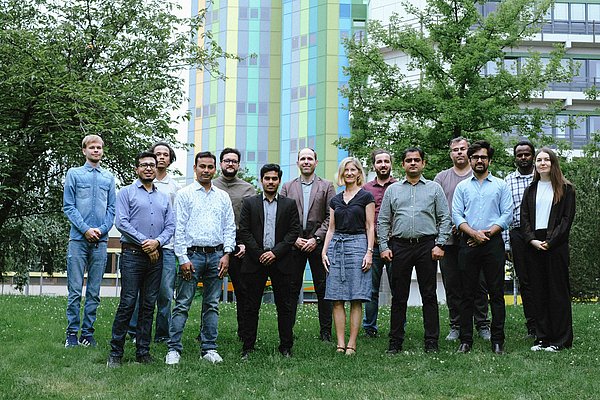
About the group and the topic
Our research is motivated by the global energy transition aiming to establish a sustainable future, which calls for the development of cost-effective, earth-abundant materials for energy conversion and storage. We model a wide range of electrode materials under applied bias, including two-dimensional materials, transition-metal oxides, transition-metal sulfides, and single-atom catalysts, to obtain detailed mechanistic insights into the electrochemical conversion of oxygen, nitrogen, and carbon-containing molecules (into valuable fuels). To achieve this, we combine electronic structure calculations, force field-based simulations, data-driven methodologies, and descriptor-based analyses to capture the complexity of elementary processes occurring at electrified solid–liquid interfaces
What they expect from students:
Prospective applicants should have basic knowledge in physical chemistry, electrochemistry, and surface science. A strong general interest in processes driving the energy transition toward a sustainable future is welcome as well. Prior experience in computational (quantum) chemistry and electronic structure theory is beneficial, as it would shorten the introductory period of the project, but not essential
Papers related to the topic: Paper 1 and Paper 2
How to apply
For your application, you will need to upload your:
- Research proposal (1 page)
- CV with contact details and affiliation (max. 2 pages)
- Letter of motivation related to Solvation Science (1 page)
- Diploma of your finished education level (Bachelor or Master) and transcript. Please don't send a transcript of the middle of the course.
Prerequisites: Current Master's and PhD students in the fields of Natural Sciences, Medical Sciences, or related topics of Engineering
The program is officially open. New Application deadlines will be 1. December 2026, 1 March 2027 and 1 June 2027.
The results of first application deadline will be announced before 20. December 2026.
Win a research stay
Subject: enact your research proposal
Duration: 3 months
Location: Ruhr University Bochum, Technical University Dortmund,University Duisburg-Essen, Max-Planck-Institut
Language of instruction: English
Funding: RESOLV sponsors travel (reimbursement) and a monthly stipend
Period of research stay: before December 2027